

Swinburne to advance cardiac care and asbestos detection with industry-engaged grants

(left) Professor Mats Isaksson and (right) Associate Professor Rosalie Hocking will lead innovative artifical intellgence projects through two grants from Australia's Economic Accelerator Ignite program
In summary
Swinburne has secured two grants from Australia's Economic Accelerator Ignite program to support innovative commercialisation projects
Led by Professor Mats Isaksson, one project will advance remote cardiac care through AI-driven robotic system, delivering fast and accurate heart examinations for patients in remote areas
Led by Associate Professor Rosalie Hocking, a second project focuses on developing AI-based asbestos detection technologies to make inspecting hazardous materials faster and cheaper
Swinburne University of Technology has received funding in the latest round of Australia's Economic Accelerator (AEA) Ignite program.
Swinburne researchers have been awarded close to $740,000 to advance two innovative artificial intelligence projects, securing a portion of over $59 million shared across 155 nationally significant commercialisation projects.
The AEA Ignite grants aim to support transformative research commercialisation, fostering innovation and economic growth in key sectors.
Swinburne’s Vice President, Innovation and Enterprise, Dr Werner van der Merwe says the funding highlights the vital role Australian universities play in taking cutting-edge research from lab to market.
"AI is a rapidly advancing technology with great benefits for early adopters, driving cross-sector productivity and supporting national priorities. Australia’s strong AI research, coupled with unique data sources, creates significant demand for AI tools. Swinburne will leverage this capability to boost productivity and develop scalable AI solutions for industries worldwide."
AI-enhanced robot for remote cardiac care
A project led by Professor Mats Isaksson, titled ‘AI-Enhanced Haptically-Enabled Robot for Teleoperated Echocardiography’, has received $348,004 in funding. This project focuses on advancing teleoperated echocardiography systems, leveraging AI and robotic technologies to enhance remote cardiac care.
“The AEA Ignite grant enables us to significantly advance our existing platform for teleoperated echocardiography, so heart specialists can perform remote ultrasound examinations in real-time. With this funding, we’ll enhance our system by integrating AI-driven automation and satellite connectivity, ensuring reliable remote ultrasound examinations, even in areas with limited access to specialists, 'says Professor Mats Isaksson.
“The project has the potential to transform healthcare delivery, reduce wait times, improve, diagnostic accuracy and make critical heart assessments more accessible for patients in regional and remote communities.”
The innovative project stems from Swinburne PhD research by Dr Mauricio Hidalgo Florez and Dr Mariadas Roshan under the supervision of Professor Mats Isaksson. In addition, the project’s team includes Associate Professor Hailing Zhou and Professor Gavin Lambert, along with collaborators from RMIT University and the Baker Heart and Diabetes Institute.
AI-enhanced asbestos detection technology for faster information about hazards
A second project, led by Associate Professor Rosalie Hocking, will develop advanced asbestos detection technologies using AI and robotics. This initiative aims to enhance the safety and efficiency of hazardous material inspections, a critical step in improving public health and environmental safety. These technologies are designed to improve the accuracy, speed and safety of asbestos detection, which is crucial in preventing health risks related to exposure.
The project team includes Swinburne’s Dr Dana Rezazadegan, Dr Abdur Forkan, and Vince Lorefice, and industry partners Agon Environmental, Identifibre and Asbestossa, who will provide expertise in environmental solutions, asbestos testing, and hazardous materials inspections and reporting.
“Our group built and developed an AI-based asbestos sensor, which achieves 90 per cent precision in field testing. However, to take it further we need to expand testing across Australia,” says Associate Professor Hocking.
“Asbestos in building materials can look different in different parts of Australia. This funding is critical – we can’t release a product without knowing its strengths and weaknesses in all environments.”
-
Media Enquiries
Related articles
-

- Astronomy
- Film and television
- Social Affairs
MTC Future Aspirations camp blends STEM and Indigenous culture
The Moondani Toombadool Centre hosted 25 Aboriginal and Torres Strait Islander high school students at its recent Future Aspirations Camp, where it blended cultural activities with university experiences
Monday 02 March 2026 -
- Technology
- Science
- Sustainability
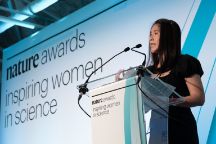
AI innovation protecting biodiversity wins global award for Swinburne researcher
Swinburne Sarawak researcher, Ts Dr Lee Sue Han has won a 2025 Inspiring Women in Science Award for her AI-driven biodiversity research, which uses artificial intelligence to identify plant species, protect ecosystems and support sustainable agriculture.
Friday 06 March 2026 -
- Technology
- Social Affairs
- Health
- Science
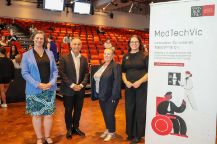
Driving meaningful progress in assisted living tech
Swinburne’s MedTechVic hub annual showcase brings together research, lived experience and practical innovation in assisted living technologies. This year's theme was ‘Real innovation, real lives’, highlighting the hub’s ongoing commitment to driving inclusive innovation.
Thursday 12 February 2026 -

- Design
- Technology
- Health
- Law
- Education
- Business
- Science
- University
- Engineering
Swinburne moves up in Times Higher Education World University Rankings by Subject 2026
Swinburne University of Technology has performed strongly in the Times Higher Education World University Rankings by Subject 2026, with two subjects moving up the ranks.
Thursday 22 January 2026 -

- Health
Revealing the parental role in preventing childhood internet addiction and how to combat it
New Swinburne-led research has found that the use of mobile devices by primary school-aged children for gaming, social media and streaming significantly increases the risk of internet addiction – and parents are the main influence.
Tuesday 20 January 2026


