

Automated composting system wins Swinburne’s ‘Design for Change’ competition

Sensors in the LIDA composting system collect data about oxygen, carbon dioxide, temperature and moisture levels which is uploaded to the cloud and can be viewed on a mobile app.
In summary
- A team of Bachelor of Computer Science students has won Swinburne’s 2022 ‘Design for Change’ competition
- They developed a mobile app to control motors and sensors of a composter prototype called LIDA, created by a new start-up industry partner
- The prototype speeds up the decomposition rate of organic matter to produce compost in as little as 60 days
An automated composting system designed by Swinburne Bachelor of Computer Science students has won Swinburne’s 2022 ‘Design for Change’ competition.
Final year students Nick French, Alex Morris, Jackson Semmens, and Trung Doan collaborated with second year student Ben Szekely. Expanding on a project that was started in 2021, the five students developed a mobile app to control motors and sensors of a composter prototype called LIDA, created by a new start-up industry partner.
The in-vessel prototype speeds up the decomposition rate of organic matter by adjusting the carbon to nitrogen levels to provide ideal conditions for microorganisms to thrive and produce compost in as little as 60 days.

Diverting organic waste from landfills to produce compost
When organic waste is left to decompose in landfill it doesn’t get the proper aeration it needs, producing greenhouse gases like methane and carbon dioxide.
“If more households composted we would drastically reduce the waste going to landfill,” says LIDA team leader Nicholas French.
“Typical household composting takes months to complete. Our client found that by optimising the carbon to nitrogen levels of the input and using a closed vessel system this total composting cycle can be reduced to just 60 days.”
LIDA creates a controlled environment for the food producing organisms to thrive. Sensors collect data about oxygen, carbon dioxide, temperature and moisture levels. This information is uploaded to the cloud and can be viewed on a mobile app.
“With LIDA we believe we can produce a carefree household composting system without the tedious maintenance or knowledge required for typical home composting, allowing Australia to start reducing its household waste and get us on track for a more sustainable future,” French says.
“We will continue with development and testing in the coming semester, and hope to complete a full trial run which will give us valuable data for further improvements to the process.”
The Design for Change competition challenges students to design and pitch STEMM prototypes that will make the world a better place. It is the brainchild of Dr Bita Zaferanloo, who aims to empower students as science communicators to lead and shape the future of STEMM.
Dr Zaferanloo leads Work Integrated Learning initiatives and collaborates intensively with industry, community organisations and university services to develop students’ employability skills and showcase best practice.
“To create real change, we need more than just brilliant scientific minds – we need our students to be trained to contribute to social change as global citizens,” Dr Zaferanloo says.
Swinburne’s Bachelor of Computer Science involves the use of the most up-to-date technology and methods, and includes a major emphasis on software development. All of Swinburne’s bachelor degrees include a guaranteed Work Integrated Learning opportunity, which could be a placement, internship or industry-linked project.
-
Media Enquiries
Related articles
-

- Student News
- Social Affairs
How Michael is creating change centred in culture
Swinburne student Michael Phelan founded the Reconnect mentoring program at the Bimberi Youth Justice Centre
Monday 02 March 2026 -
- Technology
- Science
- Sustainability
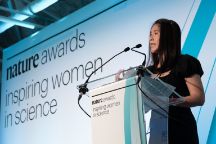
AI innovation protecting biodiversity wins global award for Swinburne researcher
Swinburne Sarawak researcher, Ts Dr Lee Sue Han has won a 2025 Inspiring Women in Science Award for her AI-driven biodiversity research, which uses artificial intelligence to identify plant species, protect ecosystems and support sustainable agriculture.
Friday 06 March 2026 -
- University
- Student News
Course Changers: Meet students who found their path by changing their studies
For some students, changing course or major can be part of finding the right path at Swinburne – and support is available to help make the switch
Tuesday 10 March 2026 -
- University
- Student News
Swinburne secures New Colombo Plan funding, expanding global opportunities for students
Swinburne has secured $943,000 in New Colombo Plan funding, expanding student opportunities for study, work and internships across the Indo-Pacific
Friday 06 February 2026 -
- Technology
- Social Affairs
- Health
- Science
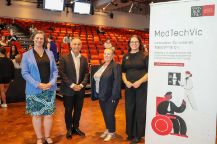
Driving meaningful progress in assisted living tech
Swinburne’s MedTechVic hub annual showcase brings together research, lived experience and practical innovation in assisted living technologies. This year's theme was ‘Real innovation, real lives’, highlighting the hub’s ongoing commitment to driving inclusive innovation.
Thursday 12 February 2026


